3rd Grade Frog Fact Scavenger Hunt
Young Zoologists at Work: Learning About the Animal Kingdom at St. John!
What do frogs, fish, and zoologists have in common? They’re all part of an exciting learning adventure happening in the classroom at St. John Lutheran School!
As part of our new Amplify reading and language arts curriculum, 3rd grade students are diving into Unit 2, Fur, Fins, and Feathers: Animal Classification. This engaging, cross-curricular unit brings reading, writing, science, and hands-on discovery together as students take on the role of animal researchers, or zoologists!
Throughout the unit, students have been observing, describing, and recording the characteristics of different animals while learning how scientists classify living things. They've explored the differences between vertebrates and invertebrates, learned about warm-blooded and cold-blooded animals, and begun investigating the five main groups of vertebrates: fish, amphibians, reptiles, birds, and mammals. So far, their studies have focused on fish and amphibians.
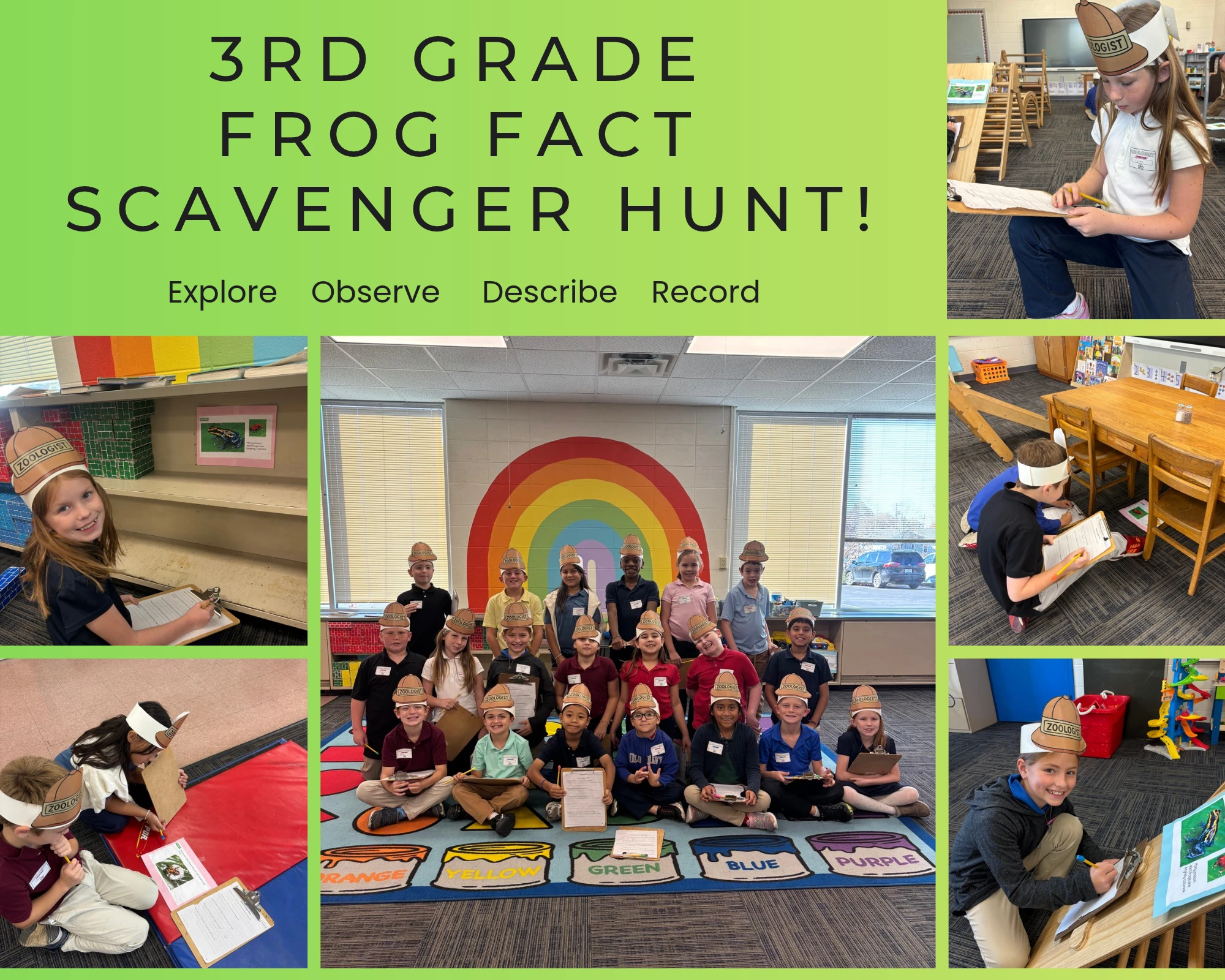
To make the experience even more engaging, students created their own zoologist hats to wear during their animal investigations. It's a fun way to step into the role of a scientist while building curiosity and excitement about the natural world!
A Frog-tastic Learning Adventure
One recent classroom activity took students on a Frog Fact Scavenger Hunt! Dressed in their zoologist hats and wearing their official name tags, students became frog scientists on a mission to uncover interesting facts about amphibians.
Frog Fact Cards were posted throughout the classroom, with some easy to spot and others cleverly tucked away. Armed with clipboards and question sheets, students searched high and low for clues, gathered information from the fact cards, and used what they discovered to answer questions about frogs.
The investigation continued back in the classroom, where students read two informational texts featuring different kinds of frogs: tree frogs and poison dart frogs. By combining movement, observation, reading comprehension, and research, the activity gave students an opportunity to put their developing skills into practice in a memorable way.
Learning That Goes Beyond the Textbook
Activities like these demonstrate the creativity and intentionality our teachers bring to the classroom each day. By connecting reading and language arts with science, teachers give students opportunities to see how the skills they are developing apply to the world around them.
Through hands-on activities, informational reading, classroom discussions, and writing assignments, students are learning not only to gather information but also to think critically, ask questions, make observations, and support their conclusions with evidence.
At St. John Lutheran School, learning is about more than memorizing facts. It's about nurturing curiosity, encouraging discovery, and equipping students with the skills and confidence to explore God's wonderful creation.
Who knew learning about frogs could be so much fun? We can't wait to see what our young zoologists discover next!