
Building Strong Readers, One Center at a Time
Building Strong Readers, One Center at a Time
Learning to read is one of the most important—and exciting—milestones in a child’s education. At St. John Lutheran School, our teachers know that every student learns differently, which is why our first-grade classroom makes time for both whole-group instruction and meaningful, hands-on small-group learning.
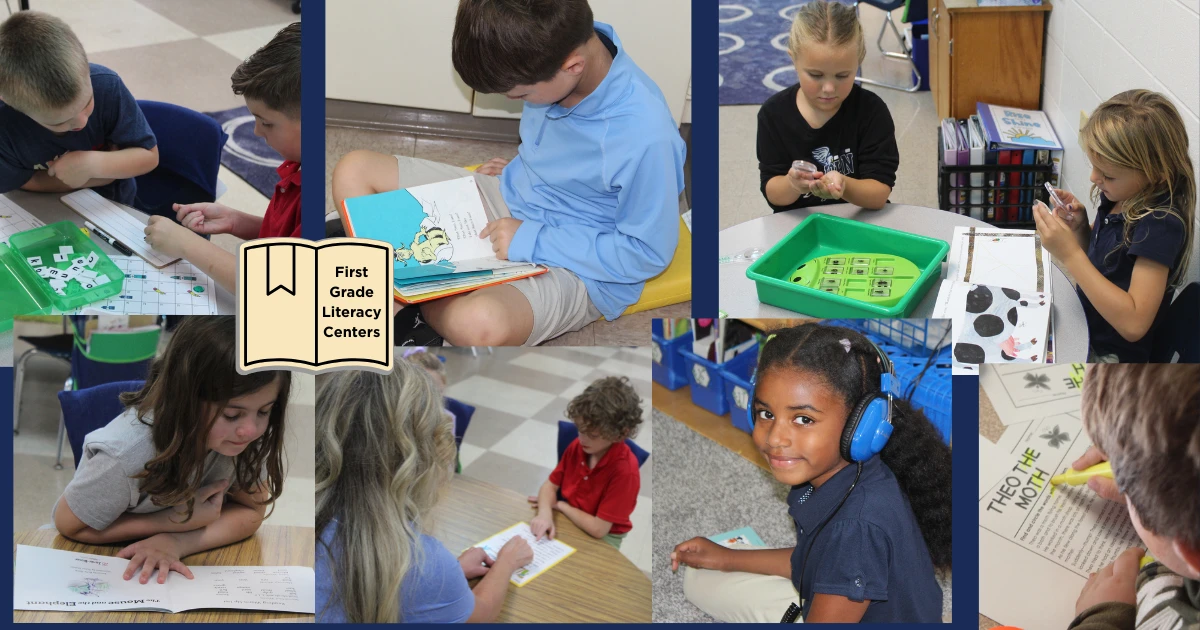
One way our first graders build their literacy skills is through literacy centers, where students rotate through a variety of activities designed to reinforce phonics, reading fluency, comprehension, writing, and a love of books. Students spend about 15 minutes at each center before rotating, completing the full rotation over two days. While the activities change regularly, each one connects directly to the phonics skills and reading concepts students are learning in class.
At the writing center, students read a story connected to their current phonics skill, identify words that follow the pattern, and then practice using those words in writing. At the word work center, students turn phonics practice into a game—building words with letter tiles, writing them on a whiteboard, and spelling them aloud while working with a partner. The listening center provides an opportunity for students who are still developing their reading skills to experience the joy of books. Students can choose a story that interests them and listen as it is read aloud, reinforcing vocabulary, comprehension, and a lifelong appreciation for reading. At the reading table, the teacher works with small groups on skills appropriate to each student's current level. Students may practice fluency, digraphs, blends, vowel sounds, comprehension, and other first-grade reading standards using stories and decodable books from the curriculum. Because these groups are flexible, teachers can adjust instruction as students grow, master skills, or need additional support.
Finally, read-to-self and inquiry activities give students time to explore books independently. A recent bug-themed unit included a collection of real bugs alongside fiction and nonfiction books, allowing students to investigate, ask questions, and choose books simply because they were interested in the topic.
These centers are a carefully planned part of literacy instruction. They give children opportunities to practice important skills in different ways while allowing teachers to spend valuable one-on-one time observing, assessing, encouraging, and teaching.
One of the many things worth celebrating about our teachers is that behind every engaging game, carefully selected book, small-group lesson, and hands-on activity is a teacher who has thoughtfully considered what each child needs to take the next step. Strong literacy instruction requires skill, preparation, patience, and a deep understanding of individual learners.
We are grateful for teachers who do all of this work so that our students can grow not only as capable readers and writers, but as curious, confident learners who discover the joy of reading.